


- Info MM:K
Contact
Muzejska pot 3, 1241 Kamnik, Slovenia
+386 (0)1 8317 662
info@muzejkamnik.siDŠ: 92474519
MŠ: 5095417000
TRR: SI56 0110 0600 0057 156Opening hours MM:K
Opening hours for visitors:
Tuesday-Saturday: 10.00 – 18.00,
Sunday, Monday and holidays: closedMuseum – Zaprice Castle is from 15.4. until 15.9.2025 also open on Sundays from 10 a.m. to 2 p.m.
- Events & News
- Exhibitions
- Units
- Collections
- Education
- Shop
- About MM:K
Spa Villas – Jewels of Kamnik’s Historic Spa and Bathing Resort
By the end of the 19th century, Kamnik had become one of the most important spa resorts in the historical region of Carniola. Situated on the left bank of the Kamniška Bistrica River, at the foot of the Kamnik–Savinja Alps, it attracted visitors with its fresh mountain air, crystal-clear water, and well-maintained forest walking trails.
Prašnikar’s hydrotherapy spa was equipped with modern facilities and offered medicinal baths, electrotherapy, massages, inhalation treatments, and, from 1891 onwards, the increasingly popular Kneipp method of treatment. Developed by Sebastian Kneipp, this approach was based on the therapeutic use of cold water, exercise in nature, and a healthy lifestyle, significantly increasing the number of visitors to the spa. Recovery and physical well-being were further supported by a balanced diet—including bran bread, simple and varied meals, and moderation in alcohol and tobacco consumption—as well as clothing made from homespun linen. For visitors without chronic illnesses, a stay of three to four weeks was generally considered sufficient to rejuvenate the body through the Kneipp regimen.
The spa was not solely dedicated to medical treatment. Guests could enjoy an elegant spa lounge, a restaurant, a reading room, concerts, dances, billiards, and skittles. Organised excursions were arranged to the Kamniška Bistrica Valley, the Tuhinj Valley, Stari grad (Old Castle), St. Primož, and the surrounding alpine pastures. Hunting and fishing enthusiasts were also granted access to the forests and waters owned by the spa. The season lasted from 1 May to 15 October, and many visitors spent several weeks—or even the entire summer—in Kamnik.
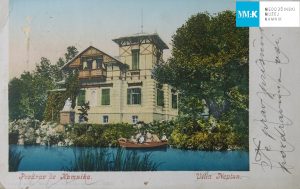 To accommodate these guests, four spa villas were built around 1890: Neptun, Mlin (Mühlhof), Luisa, and Johana (today located near Kamnik’s stadium). They provided comfortable accommodation for visitors from different social backgrounds.
The most prestigious was Villa Neptun, situated beside a pond in the immediate vicinity of the spa. It offered spacious apartments with verandas and balconies, as well as guest rooms in its tower. Villa Luisa, named after Prašnikar’s daughter Alojzija, was renowned for its large garden, shaded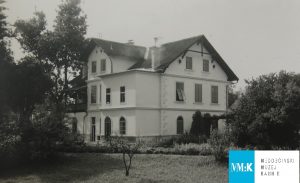 terrace, four verandas, and magnificent views of the Kamnik Alps. It also featured a spacious five-room apartment suitable for a family of eight. Villa Mlin offered more modest apartments with a shared kitchen and pantry, while its distinctive feature was its stables, where guests could keep their horses and carriages. Villa Johana stood along the road to Mekinje, surrounded by a young spruce forest, and contained several two-room apartments together with rooms for individual guests.
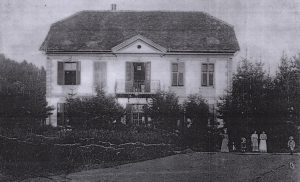 By 1892, the spa complex had a capacity of 60 beds, while additional accommodation was available in Kamnik’s inns. On average, the spa welcomed several hundred guests each year, more than half of them from other parts of the Austro-Hungarian Monarchy. Visitors arrived from Trieste, Gorizia, Zagreb, Vienna, and many other cities, including numerous prominent politicians, high-ranking clergy, and distinguished cultural figures. In 1883, the spa was even visited by Emperor Franz Joseph I, who expressed great admiration for the resort.
After the First World War, the spa changed hands several times, and its former reputation gradually declined. Some of the villas acquired new owners—for example, Villa Neptun was purchased in the late 1930s by the Kamnik industrialist Franjo Lipovec, who modernised the building. The Second World War brought confiscation and nationalisation, and in the post-war period the villas were gradually converted into apartment houses. Extensive alterations have deprived them of much of their original appearance, yet they remain an important reminder of the period when Kamnik was a renowned spa and holiday destination with a vibrant social life.
Zora Torkar