

- Info MM:K
Contact
Muzejska pot 3, 1241 Kamnik, Slovenia
+386 (0)1 8317 662
info@muzejkamnik.siDŠ: 92474519
MŠ: 5095417000
TRR: SI56 0110 0600 0057 156Opening hours MM:K
Opening hours for visitors:
Tuesday-Saturday: 10.00 – 18.00,
Sunday, Monday and holidays: closedMuseum – Zaprice Castle is from 15.4. until 15.9.2025 also open on Sundays from 10 a.m. to 2 p.m.
- Events & News
- Exhibitions
- Units
- Collections
- Education
- Shop
- About MM:K
The Folk Sculptor Lovrenc Erzar from Nasovče near Komenda. From the Collections of the Intermunicipal Museum Kamnik and the Slovene Ethnographic Museum
Lovrenc Erzar was born on 29 July 1835 in Nasovče near Komenda, in house no. 12. His father, Gregor Erzar, made his living from farming and operating a mill on the Brnik stream. His mother,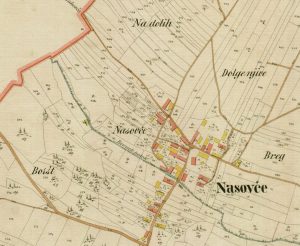 Marija, née Lap, died two months after giving birth to her youngest son, Anton, who also died. With their father’s help, Lovrenc and his older brother Janez were cared for by their aunt, Marija Erzar.
From an early age, Lovrenc was drawn to Baroque art, which he encountered in the churches in the surrounding area. He was particularly fascinated by wood, a material he knew well from everyday life. Using ordinary knives and a small pocketknife, he began carving figures of Christ, the Virgin Mary, saints and angels, as well as various decorative elements. Some of his works were made to order and were intended primarily for farmhouses in the wider area around his native village.
Only a few details of Erzar’s life and daily work have survived, and he never had his photograph taken. He died on 6 July 1903. After his death, the mill ceased operating and gradually fell into ruin, while the farm continued to operate.
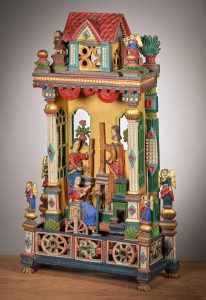 Erzar’s Domestic Altars and Other Works
In the nineteenth and twentieth centuries, the central focus of popular religious devotion on farms was the bohkov kot (God’s corner), where a crucifix and devotional images were placed in the corner above the table in the main living room, known as the hiša. Wealthier farmsteads also had domestic altars modelled on church altars and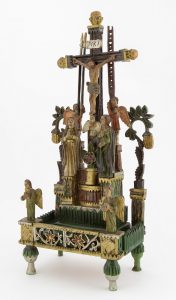 tabernacles.
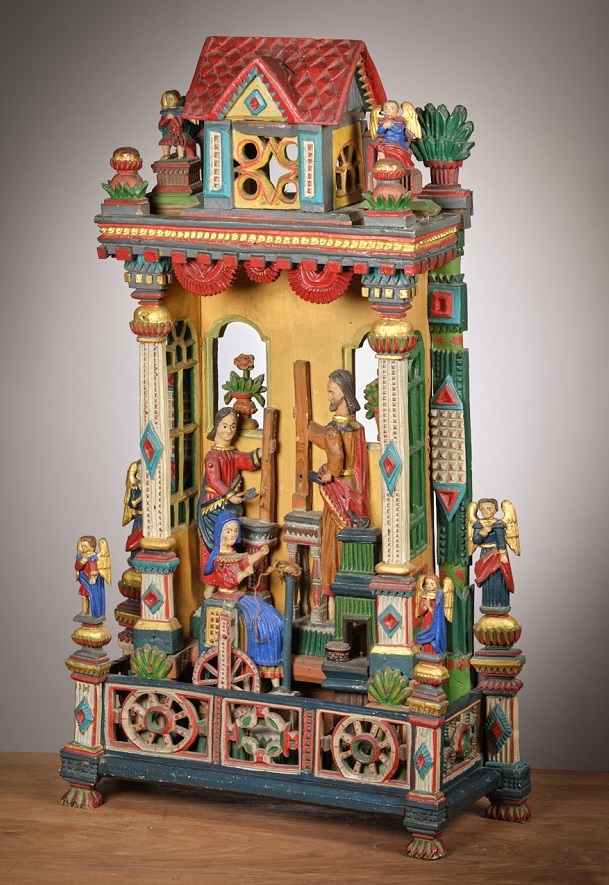
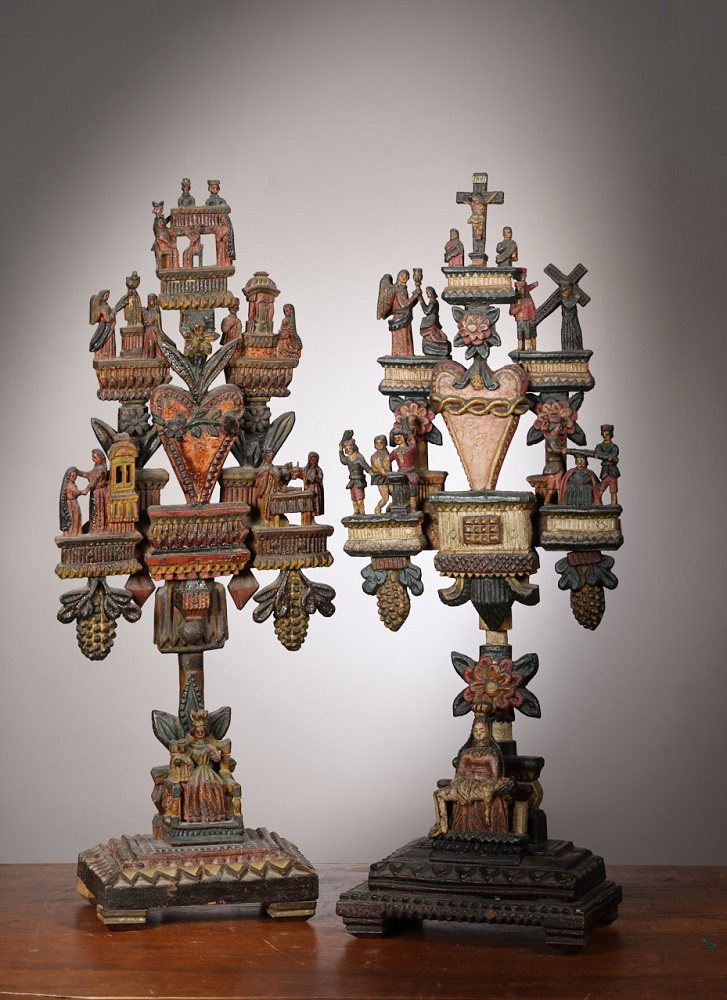
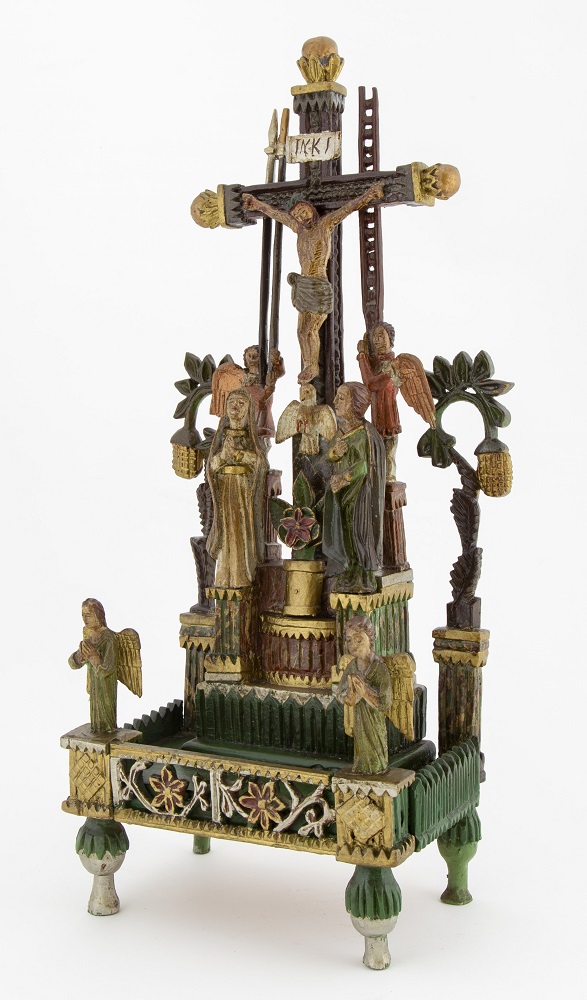
Folk sculptors adapted ecclesiastical models to the domestic setting, shaping them in accordance with religious tradition and their own aesthetic sensibilities. Among the characteristic motifs in Erzar’s work are scenes depicting the Rosary, the Holy Family, and episodes from the lives of the Virgin Mary and Jesus.
He made altars ranging in height from 25 to 100 centimetres, using mainly limewood and spruce. The altars consisted of several parts, which he painted with oil paints and gold bronze paint. In his colour schemes, he avoided strong hues, creating instead a restrained and harmonious whole.
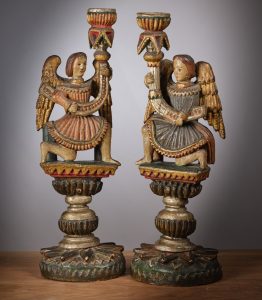 Erzar was known for his distinctive so-called “zigzag” or notched carving, most evident in the architectural elements of the altars and in the figures’ clothing. This technique enlivened the surfaces and created a play of light and shadow. The altars were also adorned with richly carved columns and pilasters.
In addition to domestic altars, Erzar carved larger statues of Christ, the Virgin Mary and various saints, as well as Nativity scenes and smaller crucifixes. In local memory, he is remembered above all for his domestic altars, in which his imagination and carving skills reached one of the high points of folk religious sculpture in the Gorenjska region of Slovenia.