


- Info MM:K
Contact
Muzejska pot 3, 1241 Kamnik, Slovenia
+386 (0)1 8317 662
info@muzejkamnik.siDŠ: 92474519
MŠ: 5095417000
TRR: SI56 0110 0600 0057 156Opening hours MM:K
Opening hours for visitors:
Tuesday-Saturday: 10.00 – 18.00,
Sunday, Monday and holidays: closedMuseum – Zaprice Castle is from 15.4. until 15.9.2025 also open on Sundays from 10 a.m. to 2 p.m.
- Events & News
- Exhibitions
- Units
- Collections
- Education
- Shop
- About MM:K
Let There Be Light. The Candle-Making and Gingerbread Craft Heritage of the Stele Family
Candle-making and gingerbread making (lectarstvo) are among Slovenia’s oldest traditional crafts. For centuries, the two trades were inseparably linked, as both relied on the same raw material – the honeycomb. Honey was used to produce honey cakes, decorated gingerbread (lect), and mead, while beeswax was transformed into candles and votive offerings. Traditionally, both crafts were practised by the same master in a single workshop.
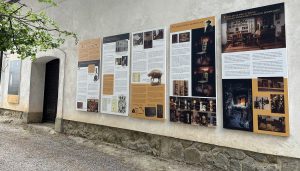 One of the most important centres of this tradition was Kamnik, whose favourable location along medieval trade routes fostered thriving commerce and craftsmanship. In the Lectar House on the town’s Main Square, candle-making and gingerbread production flourished continuously for more than three centuries, from 1701 onwards. Following the Bitenc and Cigler families, the Stele family took over the house at the end of the nineteenth century, preserving, developing, and passing the craft from generation to generation until the present day.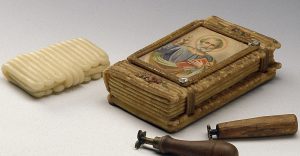
The Stele candle workshop specialised in processing beeswax. Honeycomb was purchased from local beekeepers, while the wax was repeatedly purified and naturally bleached in the sun before being used to produce a wide variety of candles. Most were made using the traditional dipping method, later complemented by drawing and moulding techniques. The workshop produced church, processional, baptismal, Easter and memorial candles, as well as small devotional candles, coiled wax tapers, wax booklets and votive figures.
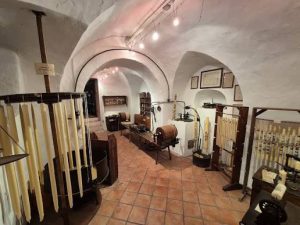 A distinctive feature of the Stele workshop was the elaborate hand decoration of its candles. Using coloured wax, stamps and relief ornaments, the craftsmen created unique works intended primarily for churches and pilgrimage sites. Their candles were supplied to numerous parishes throughout Slovenia and were also commissioned by monasteries, hospitals and customers abroad.
An important milestone in the family’s history was achieved by Janko Stele, who patented a long-burning grave candle with a protective cover in 1935—an innovation that significantly influenced the development of the modern memorial candle. After the Second World War he revived the family workshop, while his son Tone Stele left his industrial career in 1978 to devote himself entirely to the family craft. Together with his son Janez Stele, he founded the company PAX in 1989, which continues the family’s candle-making tradition today. 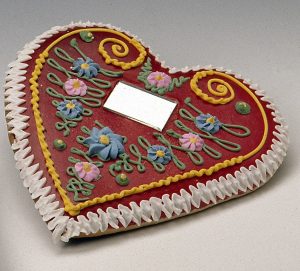
Although secondary to candle-making, gingerbread production remained an important seasonal activity in the Lectar House. Initially, dark honey cakes were made from honey, flour and spices and pressed into finely carved wooden moulds. Later, the workshop specialised in lect made from light leavened dough. Its most recognisable products were the bright red heart-shaped gingerbreads decorated with mirrors and verses, which were sold at fairs, pilgrimages and church festivals throughout Slovenia. Many of the wooden and metal moulds used to make them have survived to this day.
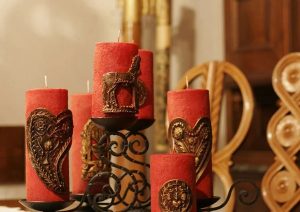 A special chapter in the history of the house is the friendship between the renowned architect Jože Plečnik and Janko Stele. Plečnik suggested using the old
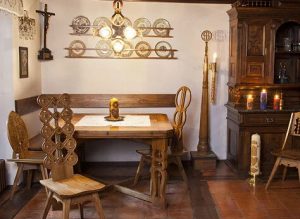 gingerbread moulds to create wax reliefs for decorating candles, and he also designed the furnishings for the Stele family’s dining room.
Today, the Stele family’s craft tradition continues into its eleventh generation. The Lectar House has been preserved as an important monument of Slovenia’s craft heritage, where visitors can discover the history of candle-making and gingerbread making, as well as the remarkable story of a family that has shaped Slovenian candle-making for more than a century.
________________________________________
Temporary Exhibition Let There Be Light. The Candle-Making and Gingerbread Craft Heritage of the Stele Family, 20 June 2026 – 30 May 2027; Intermunicipal Museum Kamnik – Zaprice Castle Text authors and photo selection: Irina Mitov and Jasna Paladin Proofreading: Ana Gruden Photographs: Stele House Archive; Jasna Paladin Archive; Intermunicipal Museum Kamnik Archive; Irina Mitov Archive Graphic design: Vladimir RistićPrinting: Element Printing House The project was funded by the Municipality of Kamnik.