

- Info MM:K
Contact
Muzejska pot 3, 1241 Kamnik, Slovenia
+386 (0)1 8317 662
info@muzejkamnik.siDŠ: 92474519
MŠ: 5095417000
TRR: SI56 0110 0600 0057 156Opening hours MM:K
Opening hours for visitors:
Tuesday-Saturday: 10.00 – 18.00,
Sunday, Monday and holidays: closedMuseum – Zaprice Castle is from 15.4. until 15.9.2025 also open on Sundays from 10 a.m. to 2 p.m.
- Events & News
- Exhibitions
- Units
- Collections
- Education
- Shop
- About MM:K
Vlasto Kopač – With a Sense for People and Place. The Tourist Settlement on Velika Planina and Other Projects in Kamnik
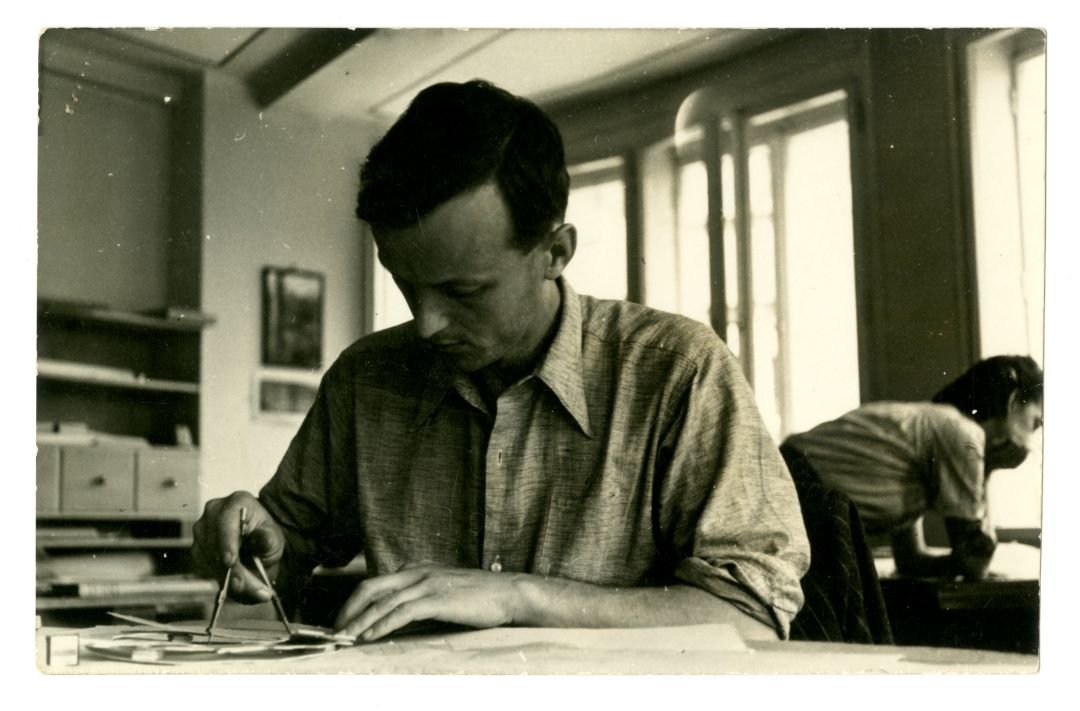
This exhibition is a tribute to Vlasto Kopač and his work in preserving Velika Planina, as well as his contributions across many other fields in which he created an invaluable and extensive body of work.
In the first section, we present Vlasto Kopač through biographical data. Visitors will learn about his challenging life journey, which led him from his birthplace in Žiri, through Kranj, to Split and Ljubljana. He was born in 1913 as Vlastimil Rafael. He was a student of Professor Jože Plečnik, and worked as an architect, conservator, draftsman, mountaineer, and guardian of intangible, natural, and cultural heritage, among many other roles. Throughout his life, he produced hundreds of plans, drawings, and emblems for various mountaineering and other organizations. He also designed books, drew vignettes, illustrations, and covers for newspapers, books, and articles. Vlasto Kopač was also a photographer, writer, urban planner, editor, and much more.
You will discover fragments of his life through this exhibition.
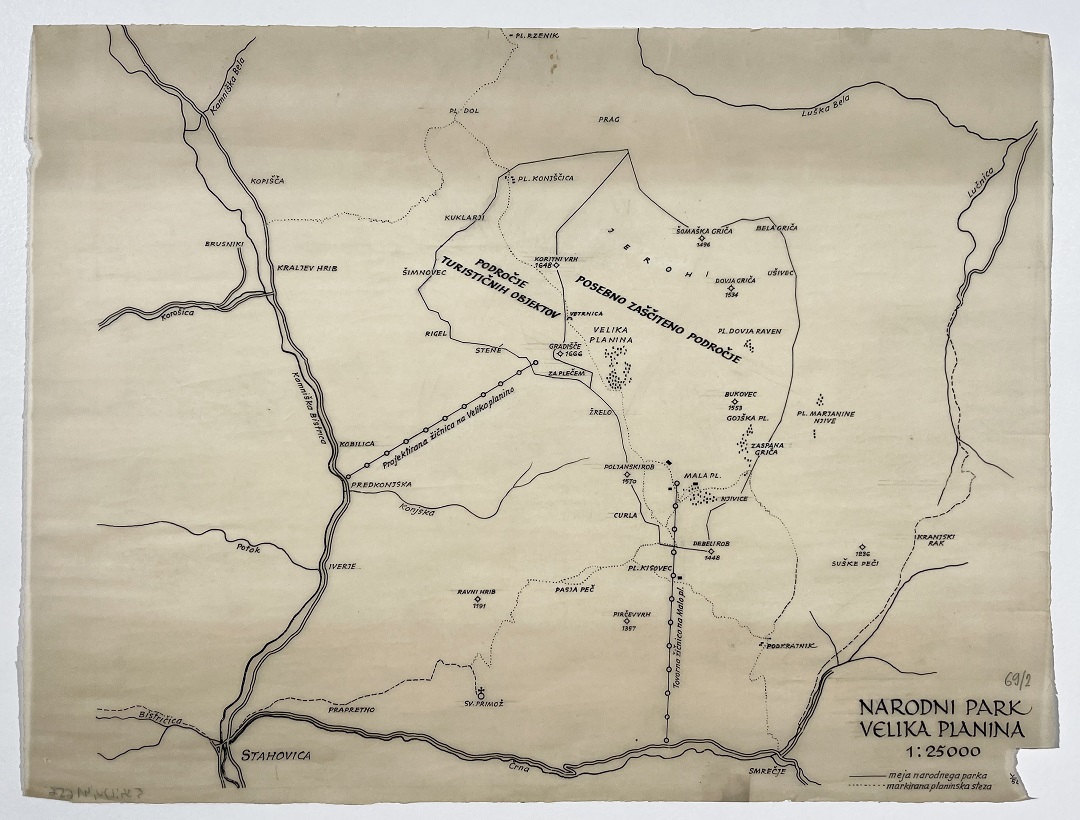
Kopač maintained a close connection with Kamnik and the Kamnik–Savinja Alps throughout his life. He participated in the renovation of mountain huts, designed the bivouac below Mount Skuta, and contributed to the urban development of Kamnik. He created development plans for Mali grad and for the renovation of the mountain hut at Stari grad (both already at the end of the 1950s). He then devoted all his efforts to both the protection and the tourist development of Velika Planina.
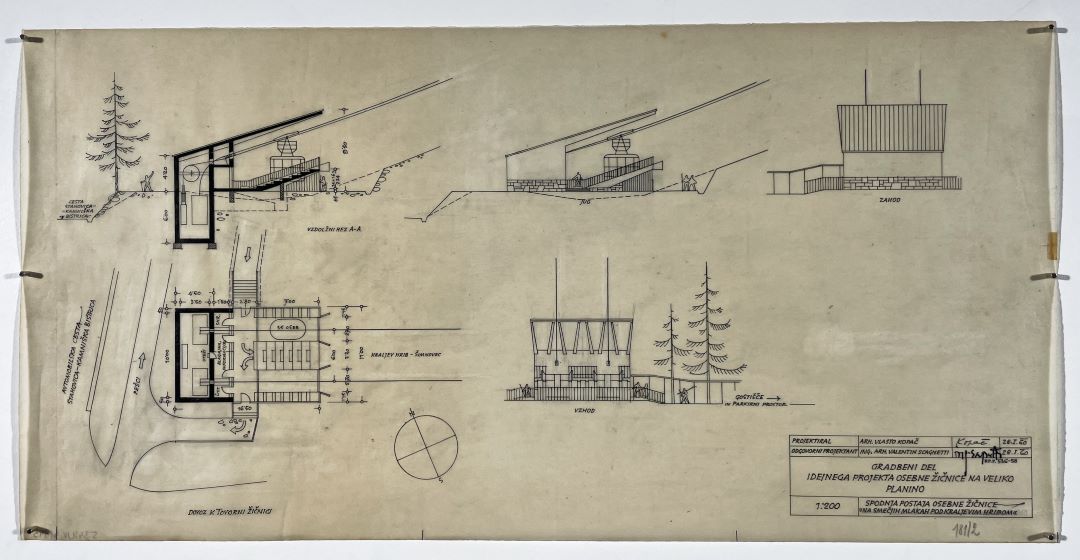
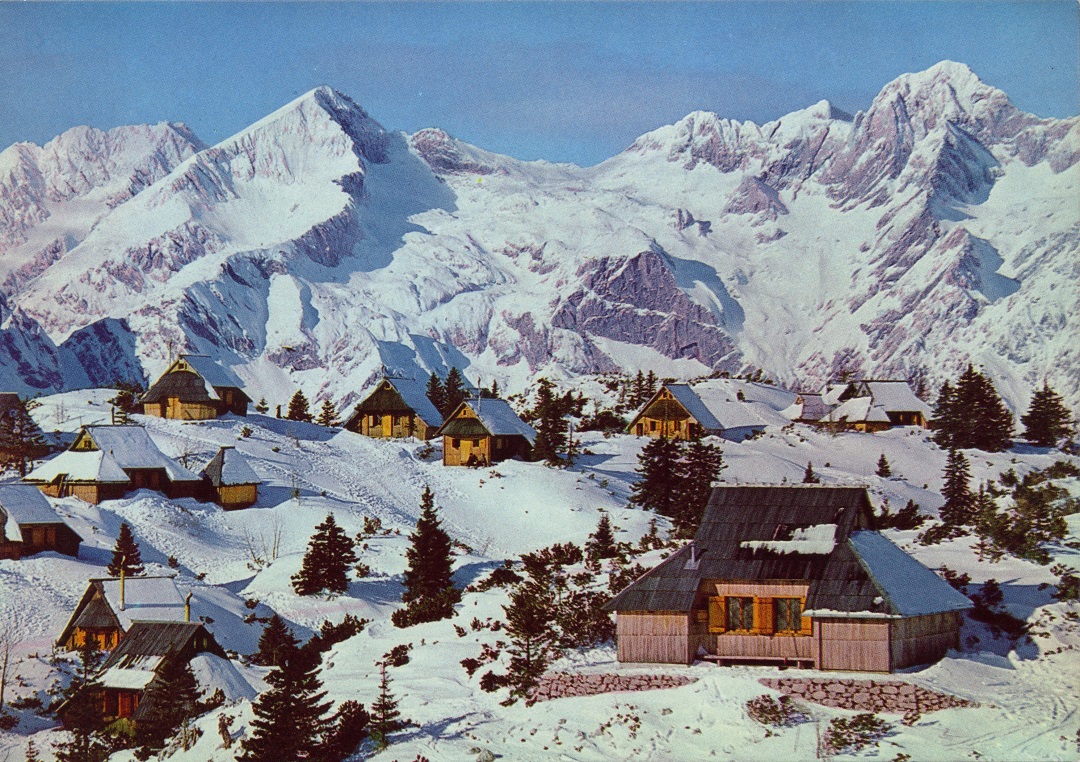
He understood it as a unique cultural and natural landscape. He advocated for the preservation of shepherding traditions and opposed inappropriate interventions such as large barns or mass tourism lacking sensitivity to the environment. He designed a tourist settlement modeled on traditional shepherds’ huts—small wooden cottages adapted to both people and nature. He also designed cableway systems, the Hotel Šimnovec, and more. His 1964 urban development program established a model of sustainable development for the plateau, in which tourism complements rather than displaces traditional activities.
Kopač’s vision was focused on achieving a balance between people, nature, and heritage. Today, as Velika Planina faces the pressures of mass tourism and environmental challenges, his ideas remain highly relevant. They highlight the importance of moderation, respect for place, and the preservation of landscape identity—values that can quickly be threatened by careless interventions.
Our exhibition was co-created by many individuals who shared their stories and memories of holidays spent in the Velika Planina tourist settlement; others contributed photographic material. Particularly valuable are the objects of Vlasto Kopač borrowed from our museums, as well as those preserved by Miha Mraz in the Ruševka hut—a hut built by Kopač himself for his family on Velika Planina. Unique and irreplaceable is the film shot between 1966 and 1968 by Bojan Rebolj, documenting the construction of his private holiday cottage. Mr. Pirc provided photographs of articles from factory newsletters describing workers’ union tourism on the plateau. Mr. Anton Jerman donated a unique model of the cable car to Velika Planina, made according to Kopač’s architectural plans. The Rebolj family also donated items from their holiday cottage, which now enrich the exhibition space.
____________________________________________________________________________________________________________________
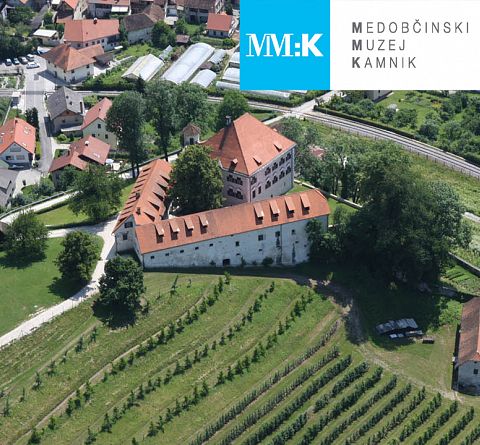
Vlasto Kopač – With a Sensitivity to People and Place. The Tourist Settlement on Velika Planina and Other Projects in the Kamnik Area, 6.5.2026 – 6.5.2027, Intermunicipal Museum Kamnik. Zaprice Castle.
Authors: Janja Železnikar (MMK) and Saša Roškar (ZVKDS, OE Kranj); Co-authors: Vanda and Bojan Rebolj, Borut Peršolja, Miha Mraz; Stories about holidays on Velika Planina contributed by: Vanda Rebolj, Borut Peršolja, Tanja Sitar, and Helena Sterle; Design: Žiga Okorn and Barbara Sirk, Uvid.si d.o.o.; Proofreading: Ana Gruden; Photography: Vlasto Kopač, Andrej Šlebir, Saša Roškar, Andreja Humar Gruden, Helena Kermauner, Borut Peršolja, Dejan Habicht, Bojan Rebolj, Borut Peršolja, Marjan Potrč, Janja Železnikar, Peter Fister, Irena Pavli; Exhibited materials are from the archives of: Mojca Kopač; MMK (Intermunicipal Museum Kamnik); ZVKDS, OE Ljubljana (Institute for the Protection of Cultural Heritage of Slovenia, Regional Units Ljubljana and Kranj); MAO (Museum of Architecture and Design); MNSZS (Museum of Modern and Contemporary History of Slovenia); MGML – Plečnik House (Museum and Galleries of Ljubljana – Plečnik House); GMJ – SPM (Upper Sava Valley Museum Jesenice – Slovenian Alpine Museum); GIAM ZRC SAZU (Anton Melik Geographical Institute, ZRC SAZU); Katja Šturm; Borut Peršolja; Miha Mraz; Marjeta Keršič Svetel; Vanda, Bojan and Vojko Rebolj; Katja Šturm; Majda Tratnik; Meta and Pavla Lah; Aleš Pirc; Zvonka Šenica; Metka Štrajhar; Helena Sterle; Vilko Rifel; Model restoration: Tea Kregar; Audiovisual materials: Vanda and Bojan Rebolj; TV Archive and Documentation, RTV Slovenia; Exhibition production and panel printing: O.K.VIR d.o.o.
Project funded by: The Ministry of Culture of the Republic of Slovenia and the Municipality of Kamnik